About Floor marking tape
Floor marking tape is an industrial-strength adhesive used to designate traffic lanes, safety hazards, and storage zones on facility floors. Unlike paint, these tapes offer instant adhesion, easy removal for layout changes, and various specialized finisheslike anti-slip or glow-in-the-darkto meet OSHA and ANSI safety standards.
Standardized Color Meanings
Using a consistent color-coded system helps employees quickly identify hazards or locations without needing to read signs.
Yellow: Most common for marking traffic lanes, walkways, and work cells.
Red: Reserved for emergency/fire equipment, stop areas, or defective/scrap material zones.
Green: Typically denotes safety equipment, first aid stations, or finished goods storage.
Blue: Generally used for raw material storage or informational signs.
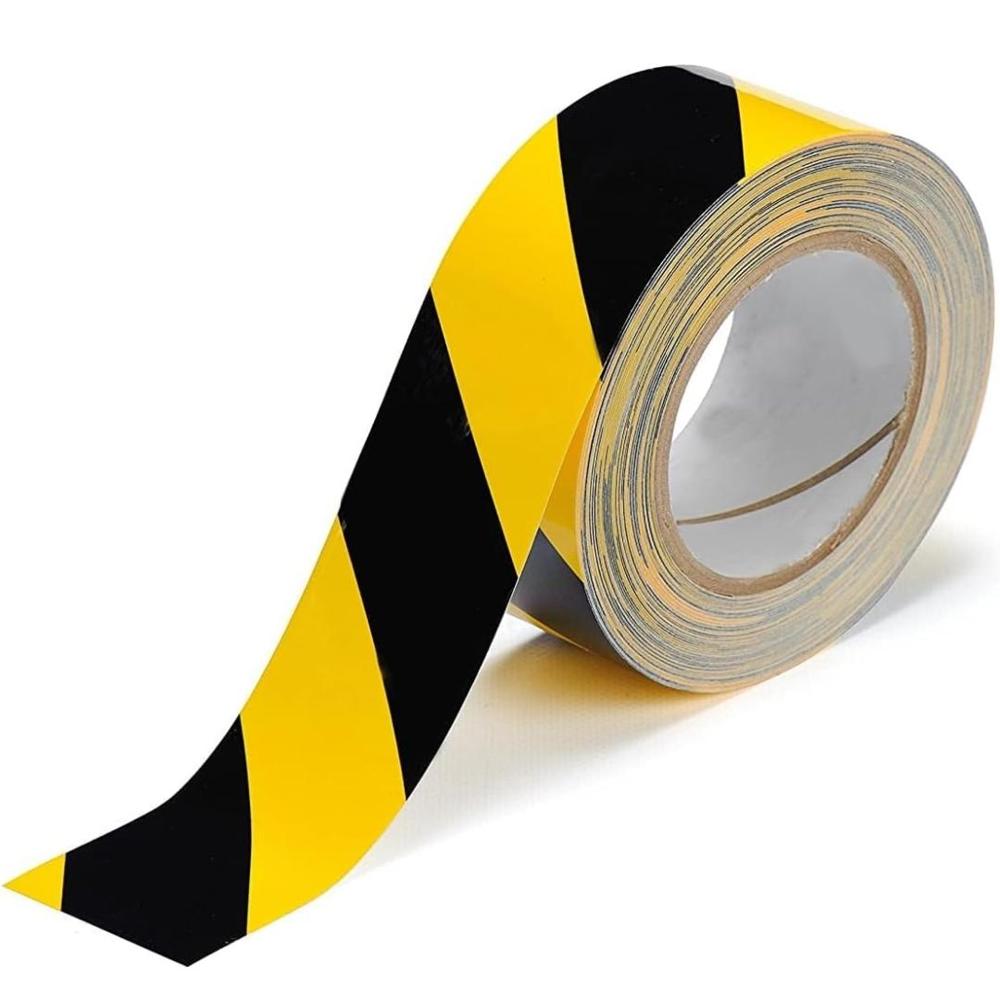
Yellow/Black Stripes: Warns of areas with physical or health hazards, such as low-clearance zones or trip hazards.
Red/White Stripes: Identifies areas that must be kept clear for safety compliance, like electrical panels or fire exits.
Tape Material & Durability
Selecting the right material depends on the environment and the volume of traffic.
Vinyl (PVC): The standard choice for general-purpose marking. It is flexible enough to conform to curves and irregular surfaces while resisting moisture and mild chemicals.
Polyester (PETG): High-performance tape that is up to four times stronger than vinyl. It is specifically designed for heavy industrial use, such as areas with constant forklift traffic and pallet dragging.
Anti-Skid (Traction Tape): Features a rough, abrasive surface (often silicon carbide) to provide extra grip in wet or slippery areas like ramps and stairs.
Photoluminescent (Glow-in-the-Dark): Absorbs light to provide visibility during power outages, often used to outline emergency egress paths.
Durable Safety Marking SolutionThis floor marking tape stands out with its striking yellow and black striped pattern, delivering high visibility for effective hazard identification and workspace organization. Made from tough PVC material, it is engineered to withstand daily wear in busy environments, maintaining clarity and adhesion. The tape supports safety initiatives by clearly delineating work zones, encouraging orderly traffic flow, and marking potential danger areas in both industrial and public settings.
Reliable Performance and Easy ApplicationFeaturing a pressure-sensitive acrylic adhesive, this tape adheres securely to smooth, clean surfaces and is easy to apply-even around curves and corners, thanks to its excellent conformability. The 130-micron thickness adds durability while resisting water and moderate UV exposure, making it suitable for indoor and semi-covered areas. The design ensures minimal adhesive residue on removal, keeping your floors cleaner during maintenance or layout changes.
FAQ's of Floor marking tape:
Q: How do I apply the floor marking tape for best results?
A: For optimal adhesion, the tape should be applied to smooth, clean, and dry surfaces. Simply unroll the tape, press it firmly in place, and contour it around curves or corners as needed. High flexibility ensures easy application even in complex layouts.
Q: What surfaces is the tape suitable for, and where can it be used?
A: This tape is designed specifically for smooth and clean surfaces found in industrial environments, warehouses, factories, and public areas. It's ideal for marking aisles, workspaces, lanes, and hazardous zones to improve organization and safety.
Q: What are the benefits of using yellow and black striped tape over other colors?
A: The high-contrast yellow and black stripes are internationally recognized for hazard marking, ensuring excellent visibility for safety purposes. This pattern effectively draws attention to hazardous or restricted areas, reducing the risk of accidents.
Q: When should I replace the tape, considering its temperature and shelf life limitations?
A: The tape offers reliable performance within temperatures from -10C to 60C and has a shelf life of 12 months from the date of manufacture. It should be replaced if the adhesive loses effectiveness, the tape wears down due to traffic, or if the environment exceeds specified limits.
Q: What is the process for removing the tape, and will it damage the floor?
A: The tape is designed for removability and leaves minimal adhesive residue when peeled off. For best results, gently lift a corner and pull the tape back at a low angle. If any residue remains, it can typically be cleaned with a mild surface cleaner without harming the floor.
Q: How is this floor marking tape packaged and what sizes are available?
A: Each roll measures 48 mm in width and 33 meters in length as standard. Custom widths are available on request. The tape is packaged in individually shrink-wrapped rolls or in bulk boxes for convenient storage and use.




 Send Inquiry

 Send Inquiry